








The long history of sanctions against Moscow
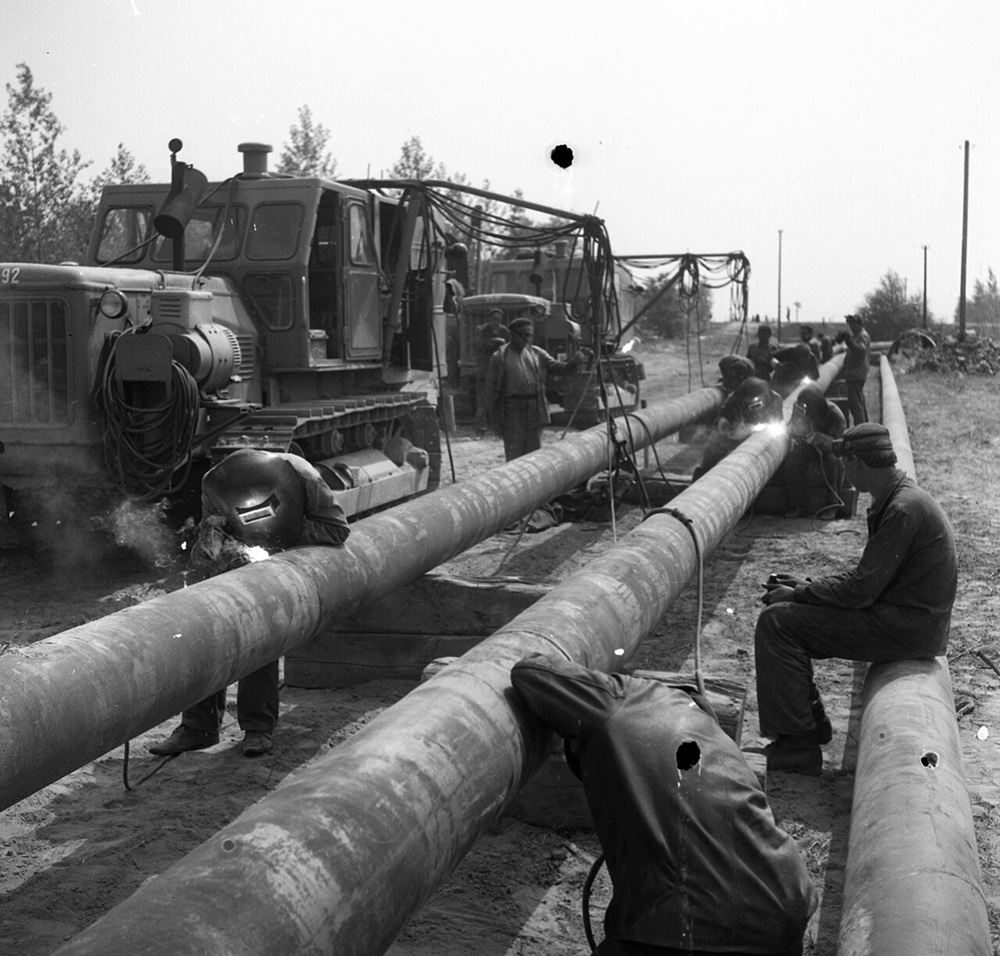
Four years after the invasion of Ukraine, Hungary and Slovakia's veto has divided the European Union over the twentieth package of economic measures against Russia. This is a new chapter in the long history of sanctions that began in the Soviet era and reached its peak in the 1970s and 1980s. The central importance of the Druzhba (‘Friendship’) oil pipeline inaugurated in 1960.
Moscow (AsiaNews) - Coinciding with the fourth anniversary of the start of the invasion of Ukraine, the veto of Hungary and Slovakia has blocked - at least for the moment - the 20th package of sanctions that the European Union wanted to impose against Russia.
The measure would have increased restrictions on the transport of oil, gas and coal by any ship from Russian ports to a total ban, also affecting the ports of third countries where Russian products are transferred.
The measure would result in further economic losses for Russian companies, which already suffered a record collapse of 7.5 trillion roubles (almost 80 billion euro) last year, especially in the industrial, metallurgical and commercial sectors.
Hungarian Foreign Minister Peter Szijjártó said that Budapest vetoed the measure mainly to avoid blocking oil deliveries through the Druzhba pipeline; but in any case, European pressure will lead to further difficulties for the Moscow government in managing the economy, and international observers are wondering how much this will actually force Russia to change its attitude in the conflict with Ukraine, and how much Russian society will perceive the damage caused by the Kremlin's aggressive policy at the international level.
Comparing the current situation with similar measures in the past, we recall the 1974 “Jackson-Vanik” amendment to the rules governing trade between the United States and the Soviet Union, which led to the end of the policy of détente initiated in the 1960s between John Kennedy and Nikita Khrushchev.
The US decided on these measures even to the detriment of its own economy, in order to punish Moscow's human rights violations. In 1980, Anatoly Cherniayev, a member of the Central Committee of the Communist Party of the Soviet Union, noted that “Carter's sanctions had such a significant impact that we had to stop slaughtering livestock in order to ration meat to 2 kg per person per year... worse than during the war”. It was not even possible to issue ration cards, not only for political reasons, but because there was not enough food to distribute.
Chernyaev's recollections were also a commentary on the situation that had arisen the previous year with the Soviet invasion of Afghanistan, which led to the height of the “sanctions war”. After all, this form of hostile pressure was not new in the previous history of the USSR's relations with Western countries, with problems of economic resistance on both sides.
In the 1930s, in fact, Westerners had participated very actively in Stalin's industrialisation of the Soviet empire, especially the Americans, who delivered large quantities of machinery and industrial equipment and, together with European engineers, were involved in projects to build the industrial giants of the time, such as Gaz and Uralmash, the progenitors of today's Gazprom and Lukoil, and many others. All this came to an end on 30 November 1939, with the Russian invasion of Finland, which led to a long period of heavy sanctions, what President Franklin D. Roosevelt called the “moral embargo”, which went as far as the exclusion of the USSR from the League of Nations, from which the UN was later born.
Under these conditions, the USSR managed to maintain high foreign trade percentages by relying on “friendly” countries, but the aviation industry entered a serious crisis due to the lack of American technology.
In the 1950s and 1960s, the Soviets became the main producers of petroleum products, with new fields in the Ural region, which became the main factor in economic growth until Putin's Russia. The Druzhba (‘Friendship’) oil pipeline was inaugurated in 1960 and was subsequently opposed by the Americans in the following years, in order to avoid creating an overly powerful Soviet bloc throughout Eastern Europe in the context of the Cold War.
It was only with the Ostpolitik that an agreement was reached between Willy Brandt's Germany and Soviet Foreign Minister Andrei Gromyko in 1969, allowing the flow of “oil friendship”. Hungary remains dependent on these relations, along with other countries such as Slovakia, and Germany has also suffered the repercussions of the sanctions of recent years, which repeat history by trying to wear down Russia, which for its part is convinced that everything will soon resume, resisting the economic difficulties that are now evident after four years of war and 11 years of sanctions.

.png)
12/02/2016 15:14











