








The other cost of war: 20,000 seafarers stranded on ships without protection
The thousands of people employed on large ships, mostly Filipinos, Indians, and Indonesians, are unable to disembark or be repatriated, while those who were set to leave have suddenly been left without work. Psychological pressure and uncertainty are growing among crews. While the human cost is ignored, business remains the priority, this according to Scalabrinian missionary Father Paulo Prigol who spoke to AsiaNews.
Manila (AsiaNews) – The conflict in the Middle East, in particular the blockade of the Strait of Hormuz, is having repercussions not only on global trade and energy markets, but also on the lives of thousands of seafarers. Trapped between job uncertainty and growing psychological pressure, some are stranded in their home countries with no prospect of earning a living or stuck on ships that have suddenly found themselves caught up in a war.
“I think the news you read about numbers, problems, oil, war, ships . . . the business side and its effects are clear. Perhaps what is missing is the human and mental cost of it all,” said Father Paulo Prigol, speaking to AsiaNews.
The Scalabrinian missionary has been working for years alongside Philippine seafarers, who represent approximately 27 per cent of the staff employed on large ships around the world.
According to the International Maritime Organization, at least 20,000 seafarers are currently stranded on thousands of ships or at risk due to missile attacks and growing instability in the region.
Crews – comprising not only Filipinos, but also Indians, Indonesians, and other Asian nationals – have been among the main victims of the conflict, exposed to war without adequate protection.
Since the start of the conflict, more than 20 attacks on commercial vessels have been reported, resulting in at least 10 deaths, even though only four or five ships pass through the Strait per day, compared to 150 before the war.
In a month, international organisations have received more than a thousand requests for help.
The approximately 2,000 ships in the Persian Gulf are at least supplied with food, water, and fuel by companies based in Saudi Arabia and Oman.
The United Nations has emphasised that many seafarers have no option to leave their ships or be repatriated, while others have seen their departures cancelled or delayed.
Added to this are payment difficulties due to lost earnings and increasing pressure on shipping companies unable to complete shipments – a situation the UN has compared to the Second World War era.
Beyond the numbers and the economic impact, the human cost of the crisis is starkly evident.
When the conflict broke out, many workers were ready to leave, explained Father Prigol, director of several Stella Maris centres providing support to seafarers and their families.
“The same day the war broke out, in all our centres, seafarers already at the airport, had to return,” the priest said. “The dream of providing for themselves, families, etc., was postponed, generating uncertainties, anxiety and mental challenges as the job that was so near, now was so far and uncertain.”
Psychological distress has recently become evident in Philippine reception centres and chapels frequented by seafarers.
“Two weeks ago, in our Masses and dormitories, we asked more than 300 seafarers: Are you anxious? The great majority said yes,” noted the Brazilian-born missionary.
When asked about their willingness to be sent to a war zone, answers were ambivalent. “In principle yes, but in practice they expressed a lot of internal, personal conflict: To stay means no job; to leave is risky; how do I explain to my family this situation when I am expected to be the bread winner?”
Fear is a constant presence. “To the question: are you afraid of going to that area? All of them answered positively, which is mentally challenging and personally conflictual.”
The crisis in the Strait of Hormuz has reignited the debate over the crucial, and essential role by largely invisible workers in the functioning of the global economic system. The slogan "no shipping, no shopping" is often used to emphasise the importance of seafarers.
But according to Father Prigol, workers are frustrated because they perceive the gap between statements and reality.
“World authorities are very worried about business, making seafarers, the second or third priority. While ‘no shipping, no shopping’ is true at the moment, their (workers’) feeling is that this is just rhetoric to keep business as usual, that business is more important than the human element.”
The United Nations has called for greater protection for crews by providing safe corridors, psychological support, and respect for fundamental rights. However, on the ground, the perception remains that the system continues to function despite the risks, once again placing the burden of the crisis on Asian workers.
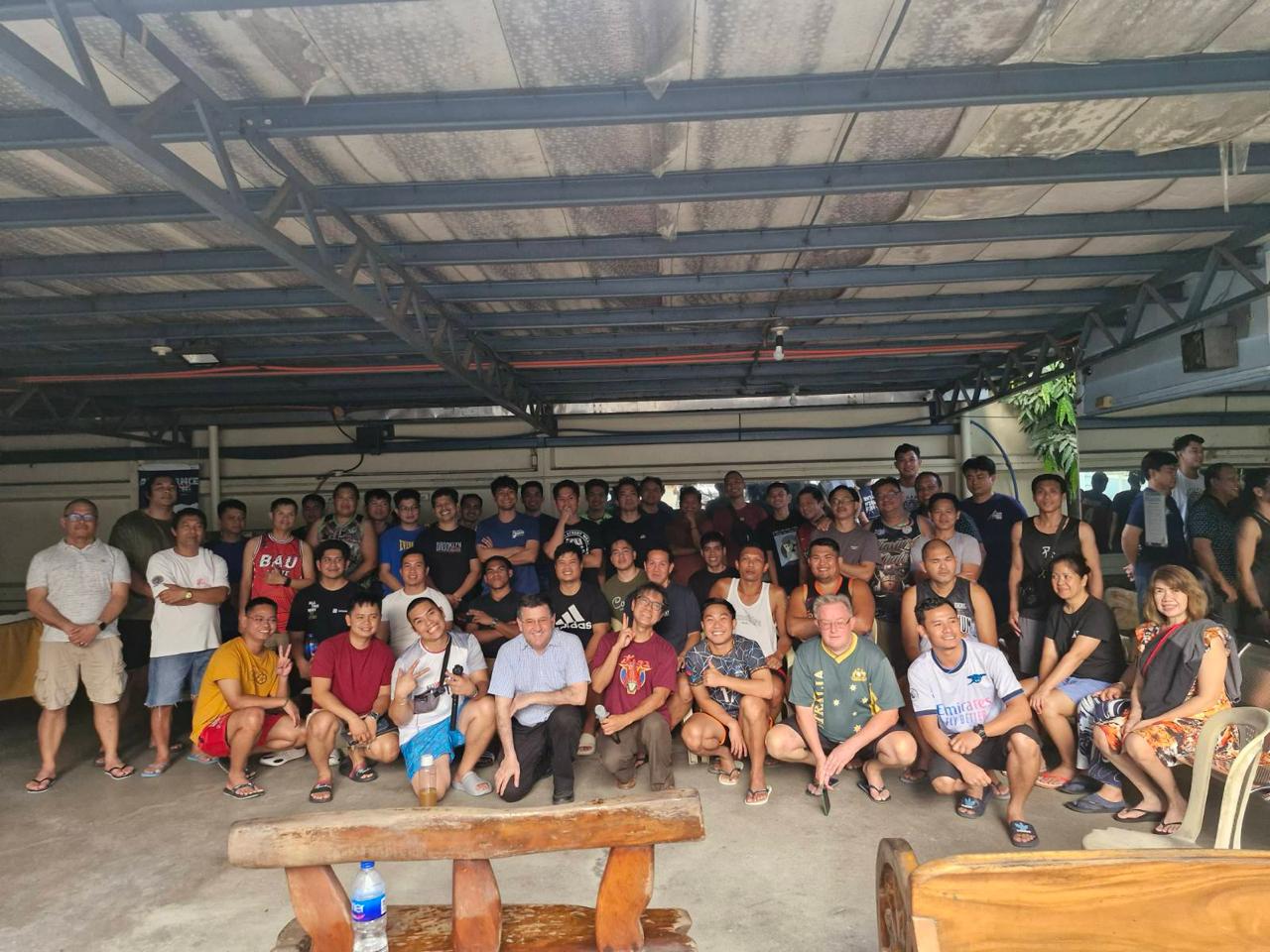
Photo: a seminar on seafarers' rights in times of war at a Stella Maris centre in Manila.

.png)
04/09/2008
12/03/2026 19:05










