





-65240.html&is_video=&description=Xi+lays+out+four+points+for+peace+%28with+an+eye+on+the+Gulf%29)


Xi lays out four points for peace (with an eye on the Gulf)
During his meeting with Prince Mohamed bin Zayed in Beijing, the Chinese president called for the creation of a shared security system for the Middle East, as well as respect for the principle of sovereignty and international rules (which Beijing itself, however, does not respect in the South China Sea). According to UNDP estimates, 8.8 million more people are at risk of poverty in the Asia-Pacific.
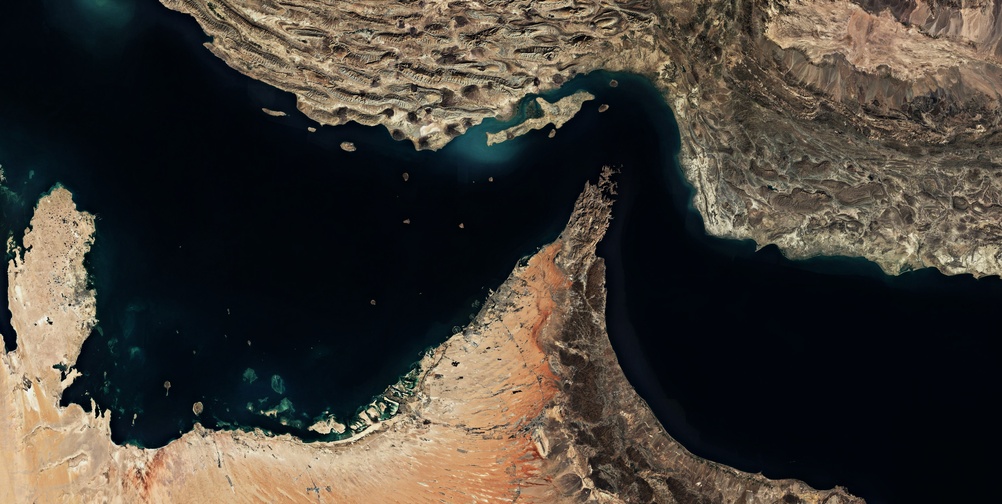
Beijing (AsiaNews/Agencies) – The world's eyes are on the Strait of Hormuz, following the announcement of a US naval blockade, which also indirectly targets ships bound for China.
Today, at least four ships linked to Iran, including two that had stopped in Iranian ports, passed through the Strait.
China’s Foreign Ministry condemned the blockade, calling it “dangerous and irresponsible”, arguing that it will only "exacerbate tensions" in the region.
Today, Chinese President Xi Jinping personally addressed the crisis, presenting a four-point proposal to promote peace and stability in the Middle East during a meeting in Beijing with Khaled bin Mohamed bin Zayed Al Nahyan, Crown Prince of Abu Dhabi, in the United Arab Emirates (UAE).
First, Xi stressed the importance of peaceful coexistence, proposing the creation of a shared, comprehensive, cooperative, and sustainable regional security system for the Middle East and the Gulf.
Second, he reiterated the principle of national sovereignty: all countries in the region must have their territorial integrity and security respected, as well as the protection of their people, infrastructure, and institutions.
The third point concerns respect for international law. Xi emphasised that the authority of international rules must be defended to avoid a return to the law of the jungle, and that such norms cannot be applied selectively.
Finally, he insisted on the need to coordinate development and security, calling on the parties to work together to create favourable conditions for regional economic growth.
It is worth noting that, for now, these are still general principles, in many ways similar to the 12-point peace plan for the Ukraine crisis China presented in 2023, which remains a dead letter precisely because it failed to address the actual steps needed to achieve the stated objectives.
The third point deserves specific comment, regarding the authority of international rules, which in this case concern the right of navigation governed by the United Nations Convention on the Law of the Sea (UNCLOS).
It is impossible to ignore that the People's Republic of China practises the same law of the jungle it condemns today when it attempts to impose its Nine-Dash Line in the South China Sea, and does not recognise the arbitration of UNCLOS.
It should also be remembered that the Gulf crisis is an extremely delicate test for Beijing. It is no coincidence that during the meeting, Xi expressed China's desire to boost its strategic partnership with the UAE, making it more solid, resilient, and dynamic.
Concrete signs of cooperation are visible. Etihad Airways announced an expansion of flights between Abu Dhabi and several Chinese cities, while key representatives of the UAE government and business community accompanied the delegation in Beijing to promote investment and trade.
Chinese Premier Li Qiang also proposed new collaborations in innovative sectors such as energy, hydrogen, and electric vehicles, encouraging greater UAE investment in China’s advanced sectors.
At the same time, China will host a summit with Arab countries later this year to conclude talks on a free trade agreement with all the members of the Gulf Cooperation Council, which includes the UAE as well as Qatar, Bahrain, Oman, Kuwait, and Saudi Arabia.
Meanwhile, just today, the United Nations Development Programme (UNDP) released a report on the potential economic impact of the Middle East crisis on the entire Asia-Pacific region.
The study estimates that 8.8 million people are at risk of falling below the poverty line, while output losses could range from US$ 97 billion to US$ 299 billion, equivalent to 0.3 per cent to 0.8 per cent of the region’s GDP.

.png)
21/10/2021 17:59
01/02/2021 14:10










