








Delhi: the Vanshakti ruling and retroactive environmental authorisations
Overturning a previous ruling that prohibited retroactive environmental permits, the Supreme Court has opened the door to projects already underway without prior permits, weakening legal protection of territories and the precautionary principle. Environmental movements are concerned at a time when India is announcing ambitious plans for the manufacturing industry.
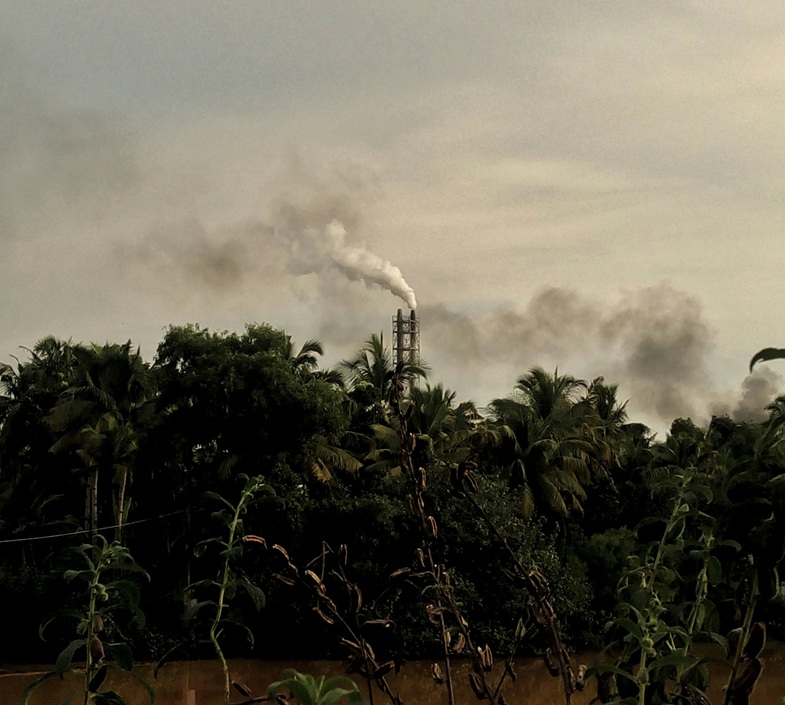
Milan (AsiaNews) - Just as India announces strong support for manufacturing in certain strategic sectors and new investments in infrastructure in its new federal budget, local environmental movements are deeply concerned about the easing of restrictions on new projects.
A ruling issued last November marked a turning point in Indian environmental jurisprudence. For decades, in fact, the Supreme Court - partly as a result of the devastating effects of the 1984 Bhopal disaster - has recognised the right to a clean environment as an integral part of the right to life enshrined in Article 21 of the Constitution.
On 18 November 2025, however, this framework was called into question. With the Vanashakti ruling, known as the “Review”, the Court overturned a previous decision from May 2025, which had annulled two government circulars from 2017 and 2021 that allowed retroactive environmental authorisations.
The Review ruled that authorities may grant environmental permits even after a project has already been started or expanded, without complying with the prior assessment requirement under the Environmental Impact Assessment (EIA) Notification of 2006.
The first ruling in May had clearly stated that ex post facto authorisations are contrary to the law and the precautionary principle, annulling the ministerial circulars and emphasising that paying fines cannot replace the prevention of environmental damage.
This decision was consistent with important precedents, such as the Common Cause (2017), Alembic Pharmaceuticals (2020) and Electrosteel (2023) cases, which reaffirmed the fundamental principle: authorisation must precede work, and environmental damage must be prevented, not remedied after the fact.
In other words, the role of the EIA is to ensure that environmental risks are assessed before projects are launched, taking into account cumulative effects on the environment and involving the community in public consultations.
The Review, on the other hand, justifies the change on economic grounds and by referring to previous rulings that had granted exemptions in specific cases. The Court argues that halting large projects already underway, often involving substantial public and private investment, could result in significant economic losses.
As a result, preventive checks often become posthumous, reducing everything to a form of damage management and turning the law into a mere recommendation, while fines become the main tool for regularising violations.
Although the “EC first” rule remains the general rule, the opening up to exceptional cases creates a precedent that can be interpreted as an incentive to start work without permits, trusting in the possibility of future regularisation.
Another controversial aspect concerns the government's commitment before the Court in 2017 to use retroactive authorisation only as an exception. The Review ignores this commitment and leaves the door open to unlimited regularisations, extending the privilege to the private sector as well.
Environmentalists have expressed strong concern. The verdict risks weakening the fundamental principles of environmental protection, replacing damage prevention with economic sanctions and undermining legal certainty.
This is a paradigm shift that could have lasting consequences for the environment, respect for the law and the role of the state in protecting the constitutional rights of citizens.

.png)
12/02/2016 15:14










